Campus Construction
The Citadel is always working to maintain and improve our academic, athletic and non-academic facilities. At any time we have more than a dozen minor and major projects underway – investing millions of dollars in the Charleston community and improving the on-campus experience for our students, faculty, staff and neighbors. Below is a list of projects currently underway and those in the planning process.
Ongoing Projects
Summerall Chapel Stained Glass Restoration
Timeline
- Phase I – Complete
- Phase II – January – April 2026
- Phase III – January – April 2027
- Phase IV – January – April 2028
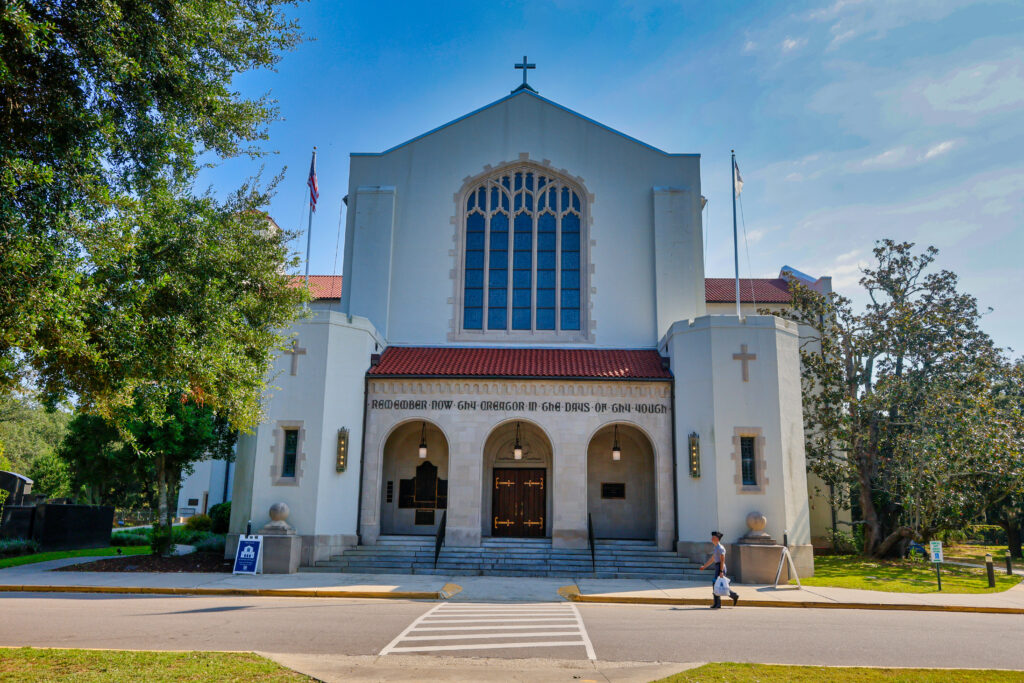
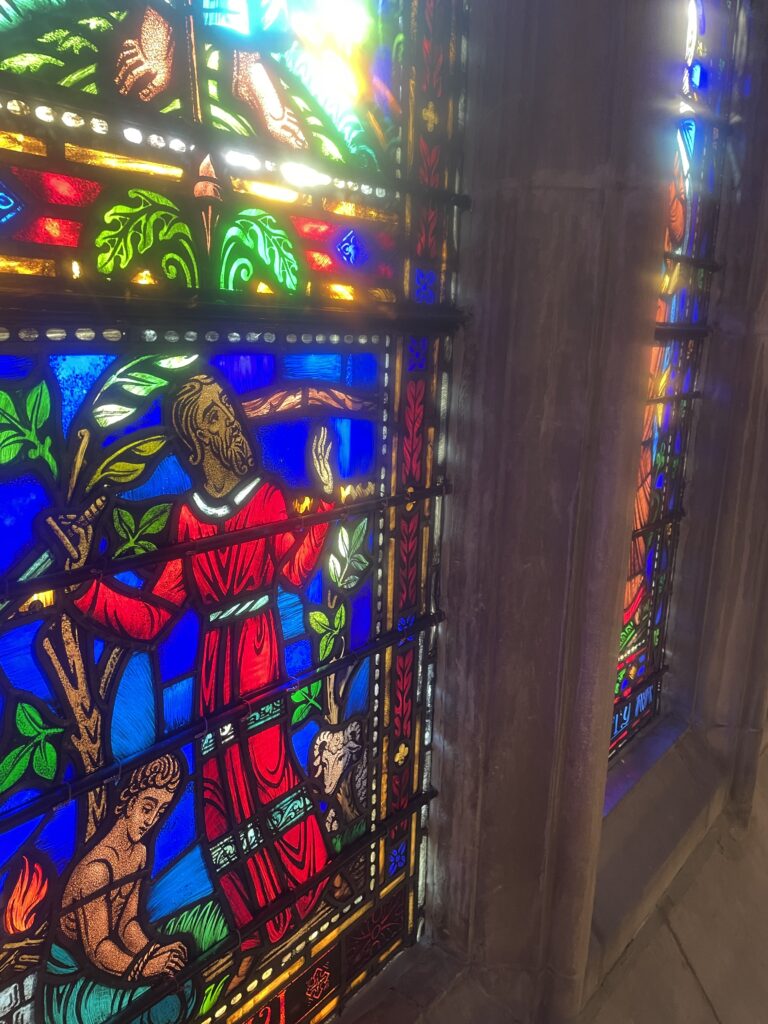
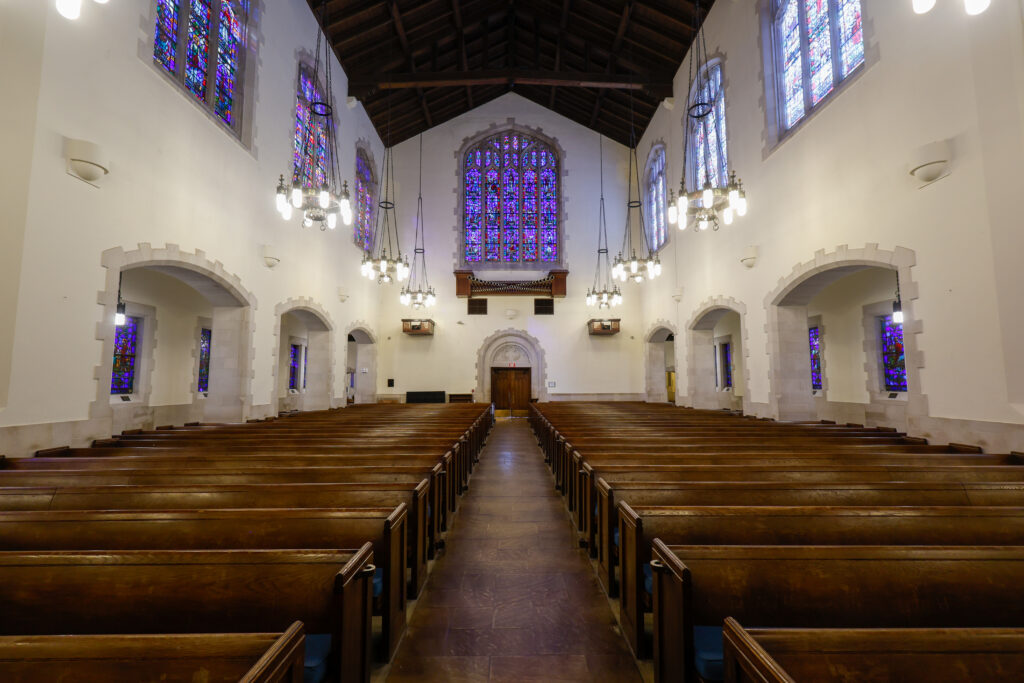
Construction began on the Summerall Chapel in 1936, and the first services were held in 1937. Upon completion, classes through 1944 could purchase and dedicate a window. The lower windows show scenes from Christ’s life and were given by various classes. The upper façade and transept windows are memorials to individual cadets, and the chancel window is a memorial to cadets who have given their lives in service. The windows are approximately 80 years old and are at a stage where they are in need of repair. The initial project will repair 4 windows that have been identified as some that have the most deterioration, with others to follow in future phases.
Project Process (for each phase)
- Remove asbestos containing caulk from the interior perimeter of the windows and re‐caulk interior
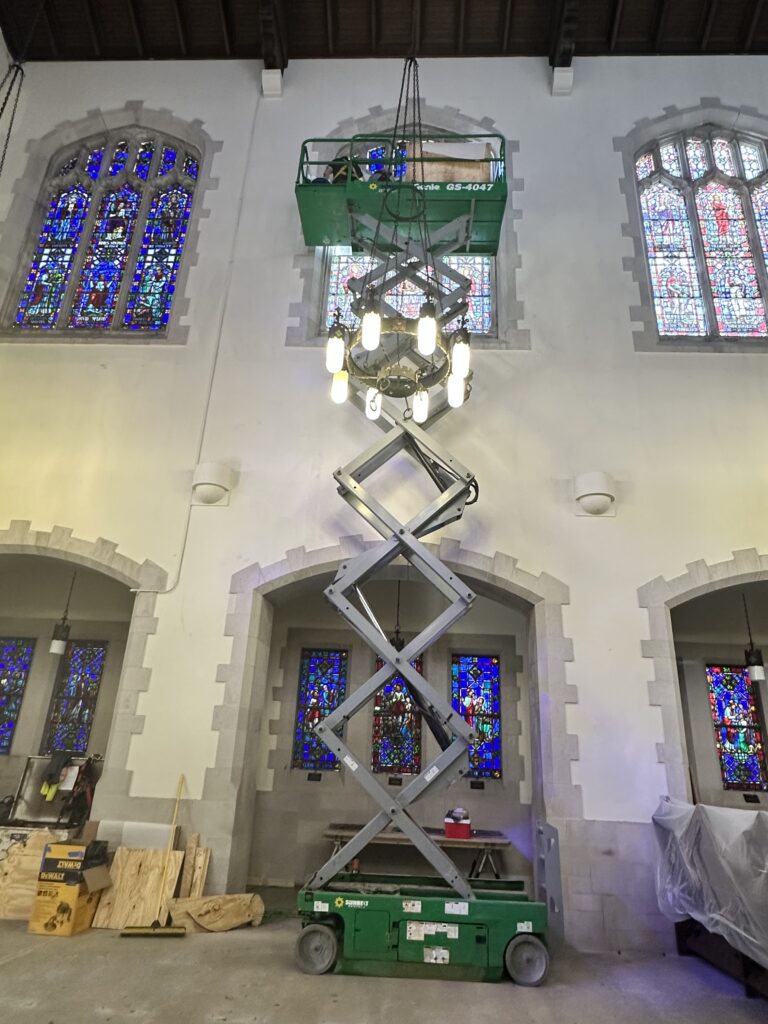
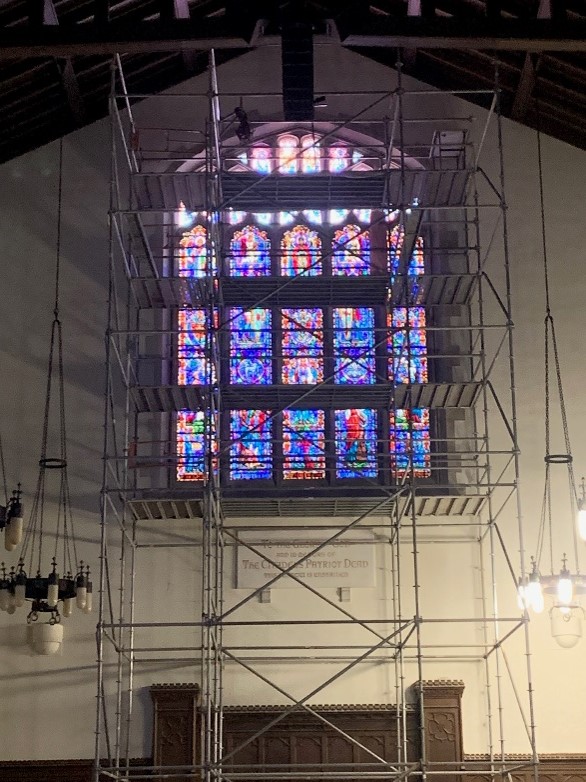
- This requires erection of scaffolding, construction of containment on the scaffolding, set‐up of a
decontamination area for workers, and air monitoring prior to and during all abatement activities. - The re‐caulking is done to (a) help stabilize the glass and (b) create a seal around the windows, so the
interior environment can be kept clean from asbestos particles while the exterior abatement is done.
- This requires erection of scaffolding, construction of containment on the scaffolding, set‐up of a
- Remove exterior protective glazing (“storm windows”) for access from the exterior
- This is required to remove the asbestos containing caulk and to access the stained glass from the
exterior for eventual removal.
- This is required to remove the asbestos containing caulk and to access the stained glass from the
- Remove asbestos containing caulk form the exterior of the windows
- This is the last step to prepare the stained‐glass windows for eventual removal.
- Erect scaffolding or bring a lift inside. A lift will be used outside.
- Document each window through photography prior to removal.
- Remove the stained‐glass windows.
- Each window section will be removed intact. The stained‐glass company will work from the interior (on
scaffolding) and the exterior (on a lift) to remove each window section. - Each section will be placed in a container/ box to prepare for transport to the stained‐glass workshop/
studio. - Installed in the openings will be temporary acrylic panels with images of the windows applied in film, so
that the temporary inserts will be translucent and will look like the removed windows.
- Each window section will be removed intact. The stained‐glass company will work from the interior (on
- Restore the Stained‐glass Windows
- Prior to work on the window sections, the stained‐glass company will document the existing condition of
the windows, including taking dimensions and doing rubbings. - The stained‐glass company will remove the lead that joins the stained‐glass pieces, repair any broken
glass, and repaint any faded or damaged sections. They will then reassemble and re‐lead the stainedglass.
In addition, there were bars added to the original windows for stabilization that will be removed,
as they have actually caused damage. - Approximately 12 months have been allowed for removal and reinstallation.
- Prior to work on the window sections, the stained‐glass company will document the existing condition of
- Reinstall the Stained‐glass Windows
- This will require erection of scaffolding inside and the use of the lift outside.
- Place each restored window in its container/ box at the workshop/ studio for transport back to Summerall Chapel.
- Remove the temporary acrylic panels.
- Reinstall each window section in its location and caulk.
- Install a new protective glazing system on the exterior to protect the restored stained glass.
Project Details
- Project Number: H09‐N176‐PG, H09‐N186‐CB, H09‐N189‐JR
- Designer of Record: McMillan Pazdan Smith Architecture
- Contract Delivery Method: Design‐Bid‐Build
- Contractor: Huss, Inc. (sub – Willet Hauser), Shenandoah Restorations, TBD as Phase III is out for bid
- Total Estimated Square Footage: NA
A‐1 Amount (for 4 upper windows per phase): $948,000; $883,515; $967,496; Phase IV is not yet funded
Additional Work Completed
- Roof Replacement: completed summer 2022: $923,93
- Accessible Entrance: completed spring 2024: $397,000
- Front door refurbishment (3 sets of double doors): $21,456 (of Accessible Entrance project funds)
- Electrical Upgrades and Audio Visual Installation: completed summer 2025: $825,656
- Front Column Stone Repair: $9,150
Additional Future Work
- Chandelier Refurbishment: $90,000 base + $33,000 alternate (2024 costs)
- Lighting Controls: $10,000 (design only)
- Pew and Kneeler Restoration: $380,000 (2024 costs)
- Office Upgrades with ADA Restroom: cost TBD
•Interior and Exterior Stone and Plaster Repair: cost TBD - Exterior Envelope Repairs: cost TBD
- Artifact and Plaque Organization: $6,700 (funds spent to date on General Summerall artifact relocation and organ plaque installation): overall cost and scope TBD
- Back Door Replacement (3 doors): $32,989
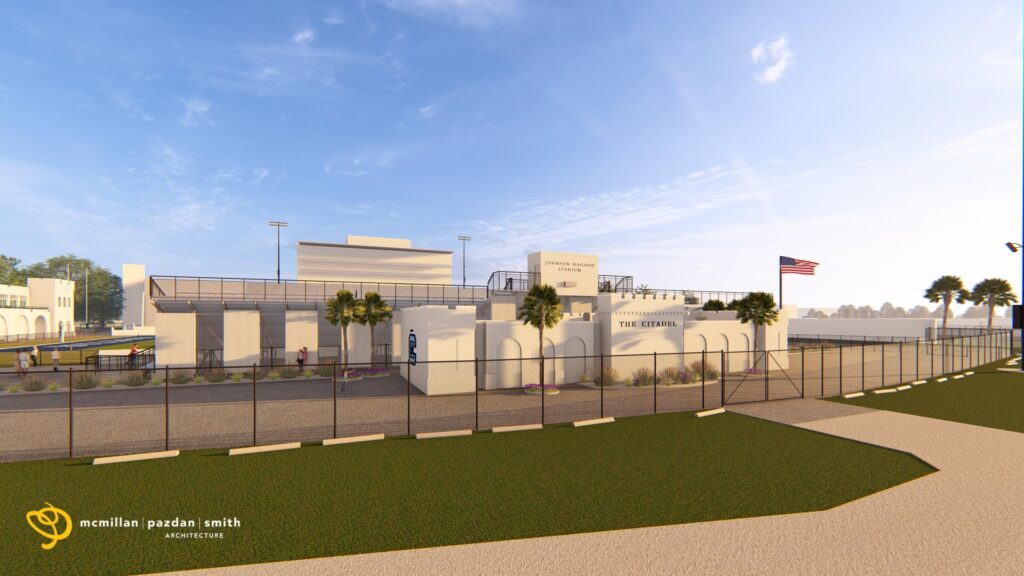
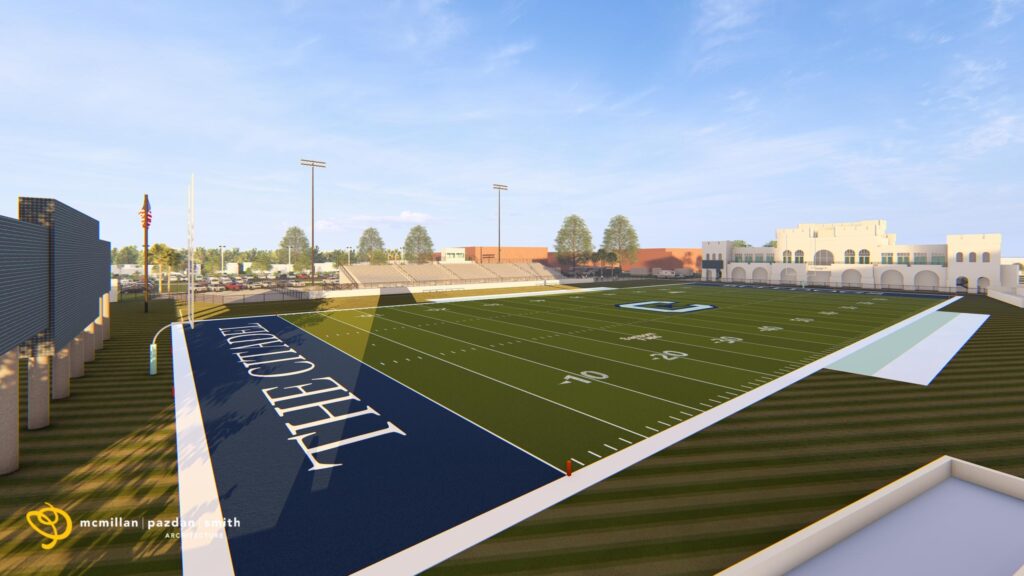
East Side Stands Replacement
Timeline
- Contract submission due February 5, 2026. On February 10, an intent to award the contract to Hill Corporation was posted. The contractor has already carefully removed the existing stands. Site prep work is underway. We expect completion by start of 2026 football season.
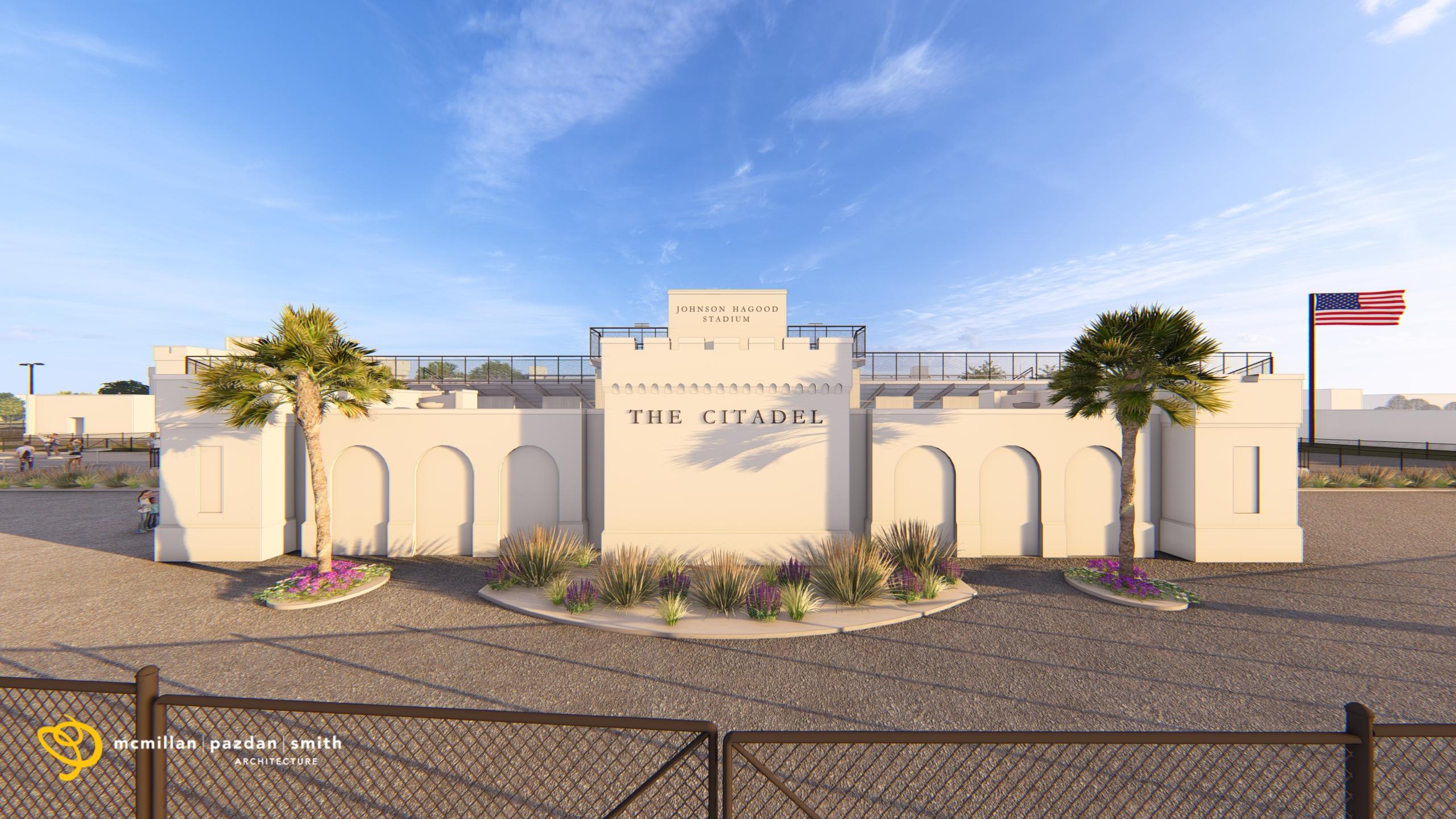
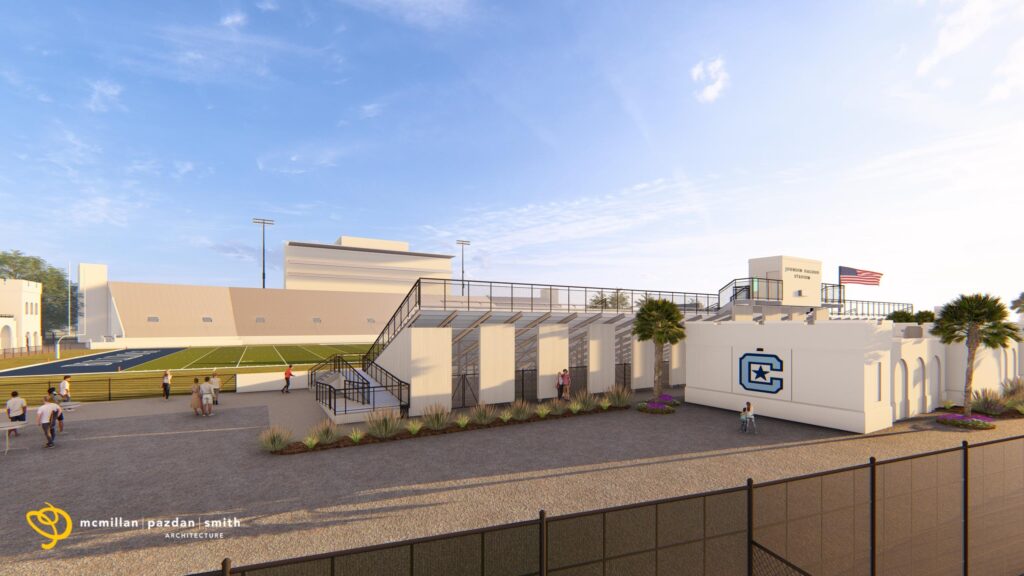
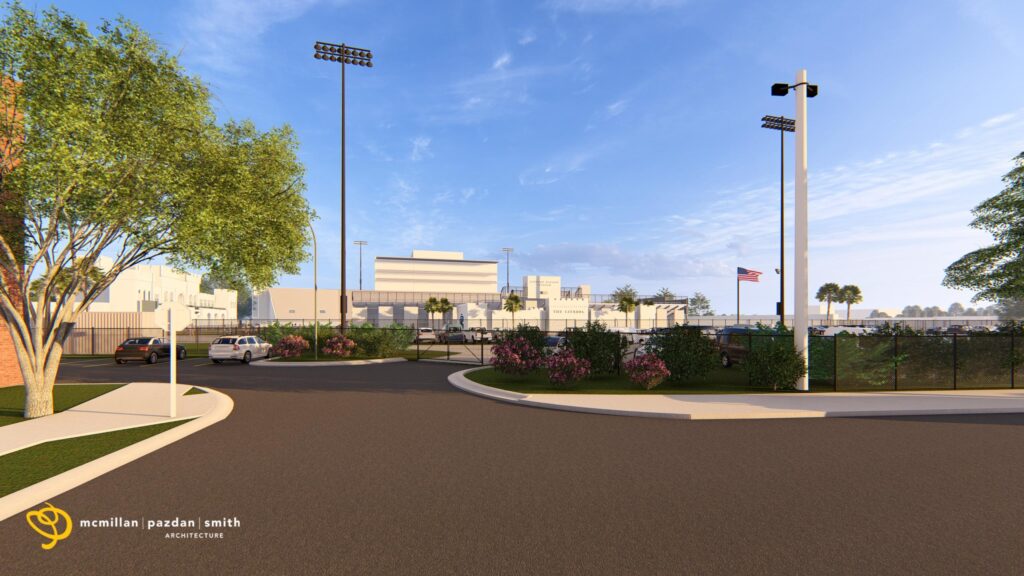
The New East Side Stands project at Johnson Hagood Stadium is intended to remove temporary seats and replace them with more permanent seats and a restroom facility. The original 10,000 seat East Side were damaged during Hurricane Hugo and eventually torn down years later. In their place 1000 temporary bleacher seats were constructed. The Citadel is not replacing the temporary seats with 2000 permanent seats. While still below the prior number of available seats, this project will dramatically improve the stadium experience for those on the visitor’s side of the stadium. The project is being funded through the generosity of Citadel donors.
Project Details
- Construction will involve the removal of existing bleachers from the site, construction of 2000 permanent seats, construction of a restroom building, and associated landscaping and hard scaping.
- There are significant city-mandated stormwater and site preparation requirements for the project that have added to the cost.
- The new facility will include restrooms and a filming platform for recording or televising games.
- The construction project does not require the driving of piles – traditionally the loudest element of the construction project – but will require the installation of earthquake drains.
- Contractor: Hill Corporation
- Estimated Project Budget (construction, permitting, management, overruns) – $6.4M
LeTellier Hall Engineering Building Replacement
Timeline
- Vacate existing building and break ground – late 2026
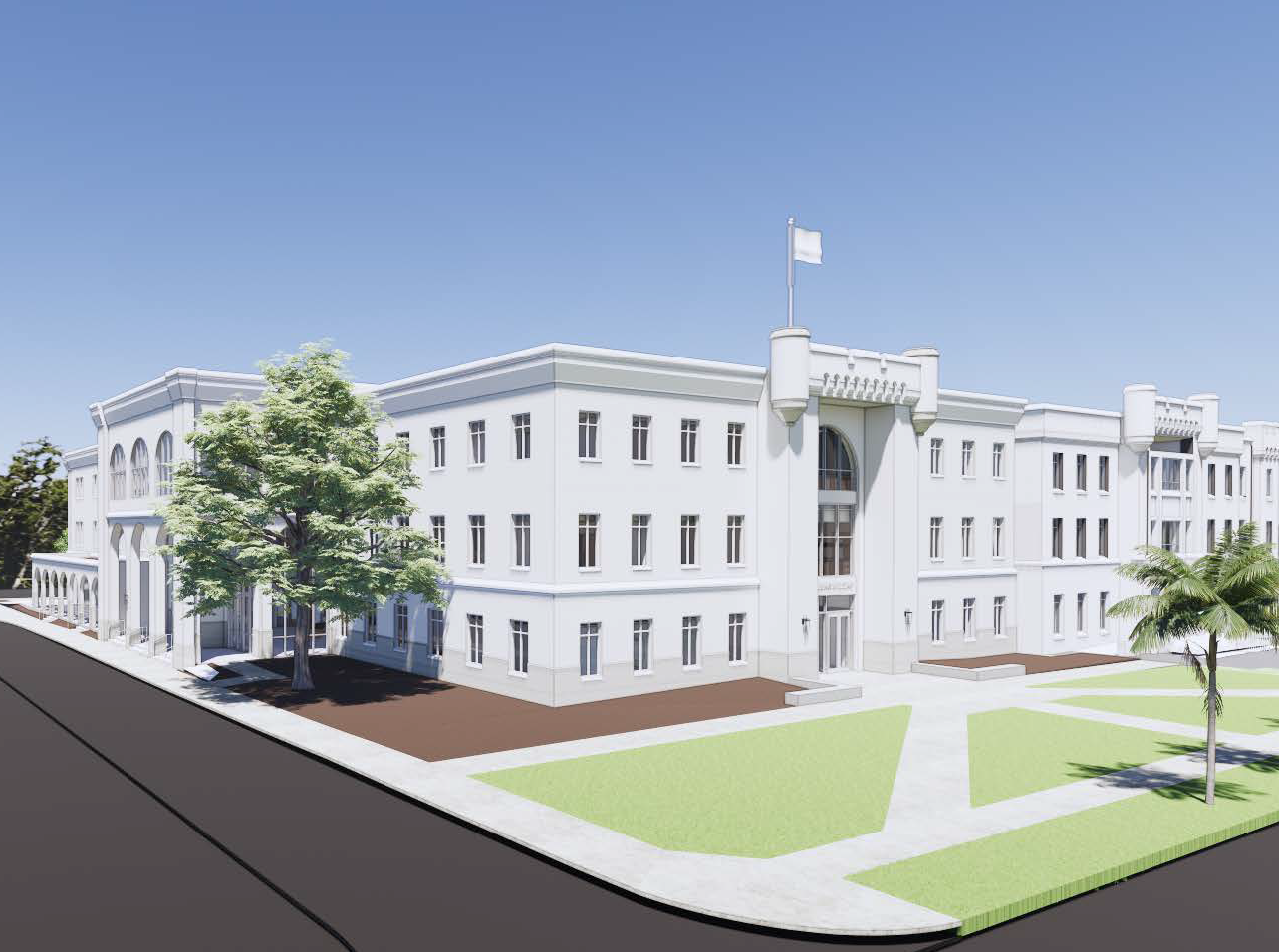
The new Engineering Building will replace LeTellier Hall, which was originally constructed as the building for the School of Engineering in 1936. The building opened in 1937 to support fewer than 60 students. It houses classroom, labs, and offices. Today there are approximately 700 enrolled in day and evening engineering classes. The School of Engineering includes the departments of Civil, Environmental, and Construction Engineering, Electrical and Computer Engineering, Mechanical Engineering, and Engineering Leadership and Program Management. The New Engineering Building will be a state‐of‐the‐art building which will replace aged facilities with modern labs and classrooms to meet current and future needs.
The new facility will create a collaborative environment fostering interactions between departments with collaborative spaces for students and faculty and by integrating spaces for Electrical and Computer Engineering, which is currently located in Grimsley Hall.
Project Details
- Project Number: H09‐9625‐CB
- Designer of Record: Quackenbush Architects/ Ayers Saint Gross
- Contract Delivery Method: Construction Manager‐at‐Risk (CM‐R)
- Contractor: Gilbane Building Company
Total Program Gross Square Footage (GSF):
86,100 SF new + 23,000 SF reno = 109,100 SF - Estimated Project Budget: $83,765,200 million
Building Spaces & Facilities
- Learning Spaces (Labs, Capstone, and Student
Project Areas):- 10 Flat 30 Seat Classrooms (900 SF)
- 10 Instructional Labs
- 6 Capstone and Student Project Areas
- 3 Computer Labs
- 1 RAVR Lab*
- 1 AI Lab*
- Offices:
- 1 Dean (250 SF)
- 4 Department Heads (180 SF)
- 45 Faculty/Staff Offices (120 SF)
- 10 Workstations
- 2 Large Conference Rooms
- 2 Medium Conference Rooms
- Additional Spaces:
- 1 Learning Theater*
- 1 Flexible Research Lab
- 15 Lab Support, Shop, and Storage Spaces
(including shop spaces for wood and metal, welding,
and 3‐D printing) - Collaboration Spaces for 4‐6+ Occupants (distributed
throughout building) - Dean’s Suite
- Exterior Work Space (patio outside of labs)
Krause School of Leadership and Ethics Renovation and Addition
Timeline
- Completion Fall 2026
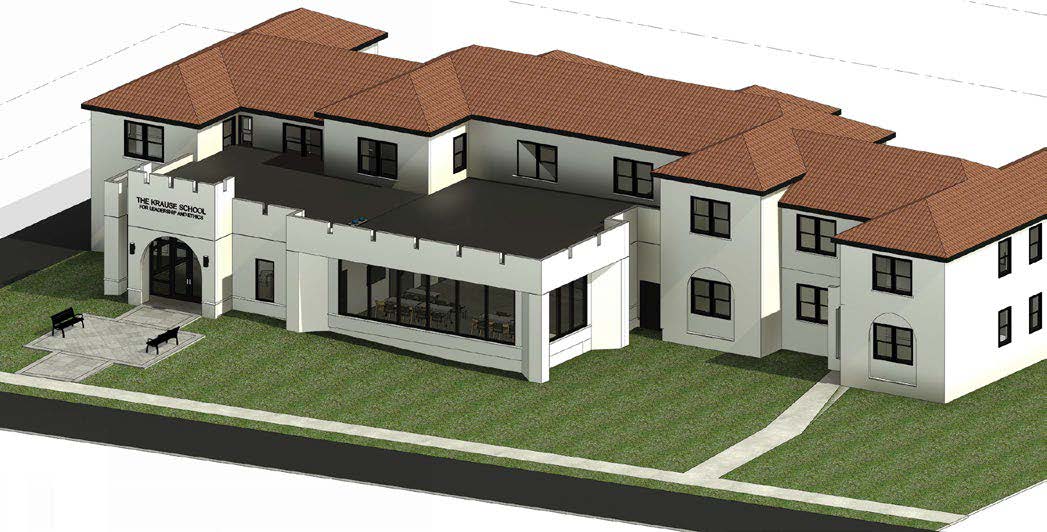
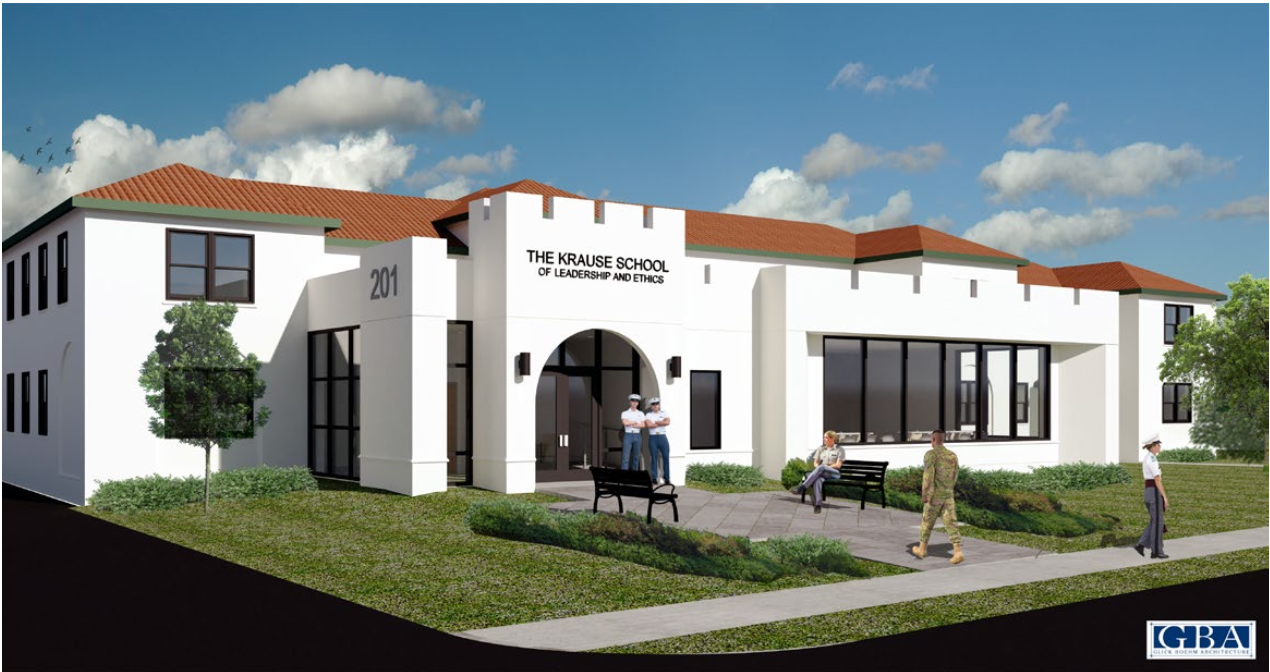
Originally constructed in 1936, 201–204 Richardson Ave is a two-story building comprised of four units, totaling 9,938 GSF. The building once served as faculty housing, is currently being used as office space. The scope of this project encompasses a single-story 2,280 GSF building addition, as well as a renovation of 201-203 Richardson, with code upgrades to 204 Richardson. The exterior finish of the building will be stucco to match the existing units, aluminum storefront window openings, and a low-slope roof. The addition will be on the north side, will house the Innovation Lab and associated spaces.
This project is under construction with Harper General Contractors. This project establishes the home for the Krause School of Leadership and Ethics. Our collective vision is to be the pre-eminent School of Leadership and Ethics. This renovation & addition will further our goals by transforming the interior into an open, contemporary space for faculty, staff, and students, that is set apart from its former use as housing.
Project Details
- State Project Number: H09-9626-PG
- Project Status: In Construction
- Designer of Record: GBA Architecture
- Contract Delivery Method: Design-Bid-Build
- Contractor: Harper General Contractors
- Approved A-1 Project Budget: $3,753,270
- Total Project SF: 12,218 [Renovation (201-204 Richardson): 9,938 SF + Addition: 2,280 SF]
Stevens Barracks Renovation
Timeline
- Phase I – August 2024
- Phase II – August 2025
- Phase III – August 2026
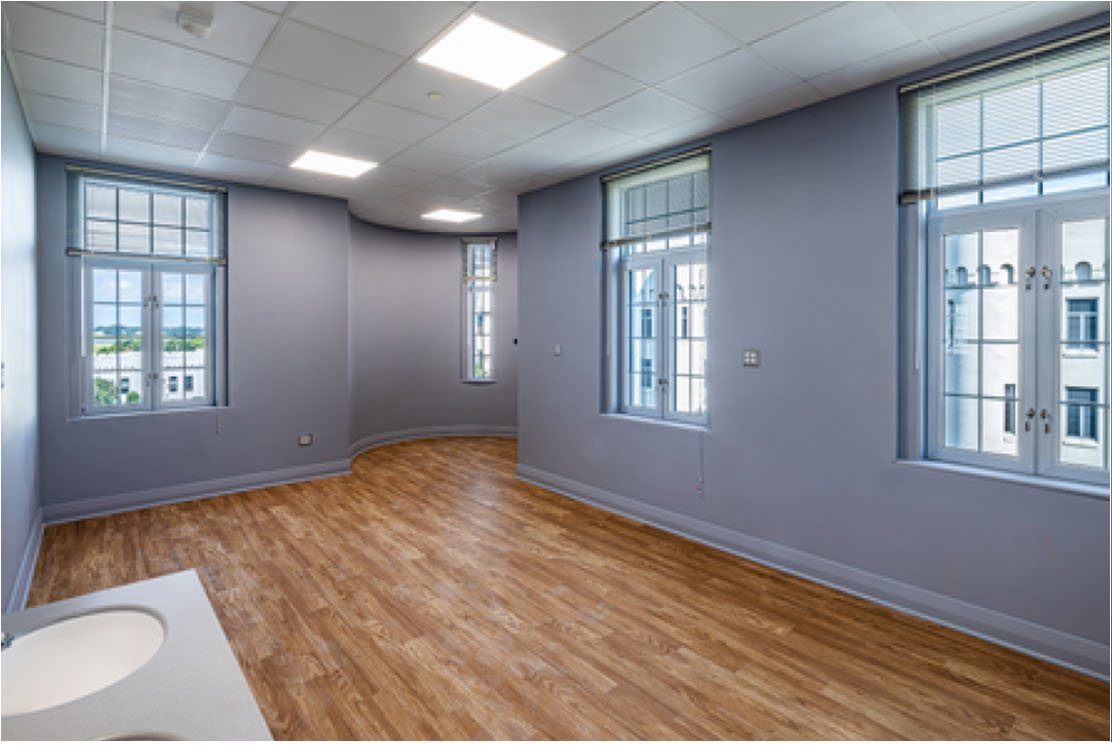
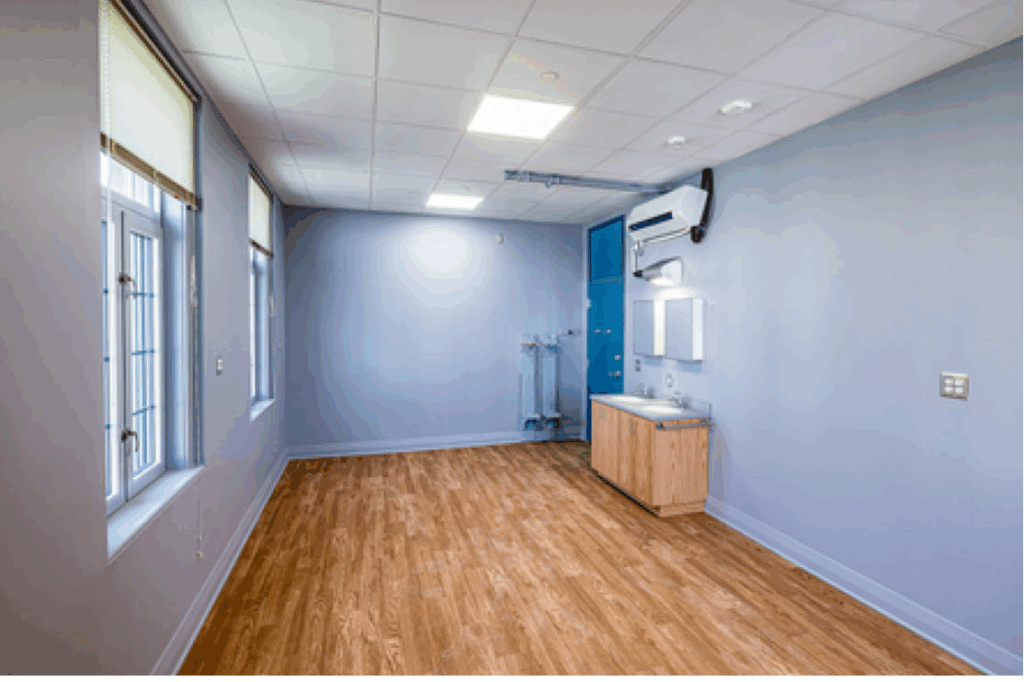
This project seeks to renovate Stevens Barracks for longevity. The project will replace the doors, electrical system, HVAC systems and plumbing components. The project will also renovate the fire sprinkler system and finishes in cadet rooms. The project will replace existing steam distribution lines as required. It will also renovate the campus chilled water system which supports the barracks and Coward Hall. In Summer 2024 and 2025, 141 cadet rooms were renovated. The remaining rooms will be renovated in Summer 2026.
Project Details
- Project Number: H09‐9623‐ML
- Total Square Footage: 86,000 SF
- Phase II Approved A‐1: $23,962,000
- Designer of Record: Davis and Floyd
- Contract Delivery Method: Construction Manager‐at‐Risk (CM‐R)
- Contractor: Thompson Turner Construction
Thompson Hall Replacement Construction
Timeline
- TBD (Planning phase)
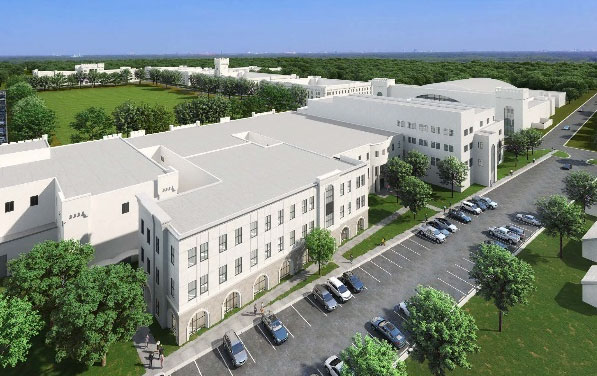
The original Thompson Hall was built in 1938 and the current building was constructed in 2001. Today, its facilities do not meet the demands of the foundational Mathematics Department and the nationally recognized Cyber and Computer Sciences Department, which require a state‐of‐the‐art facility. Overall Thompson Hall is in good condition however, major upgrades to the building will require bringing the building up to current building code standards. These include, but are not limited to, accessibility clearances, structural lateral resistance systems, and life safety systems. Thompson Hall’s south elevation forms one section of the historic façade fronting Summerall Field and is planned to be preserved
during renovations. The building would be expanded with an addition to the north.
Building Spaces & Facilities
- Learning Spaces (Labs and Classrooms):
- 9 Flat 30 Seat Classrooms (900 SF)
- 2 Computer Labs
- 1 SOC Lab
- 8 Research Labs
- 4 Research Lab Support Areas
- Offices:
- 2 Department Heads (180 SF)
- 37 Faculty/Staff Offices (120 SF)
- 21 Workstations
- 3 Conference Rooms
- Additional Spaces:
- 1 Multipurpose Lab
- 2 Cyber Ranges
- Collaboration Spaces for 4‐8 Occupants
(distributed throughout building) - Lobby Exhibit Space
Recently Completed Major Projects
Mark Clark Hall Canteen Renovation
Timeline
- Completed Summer 2025
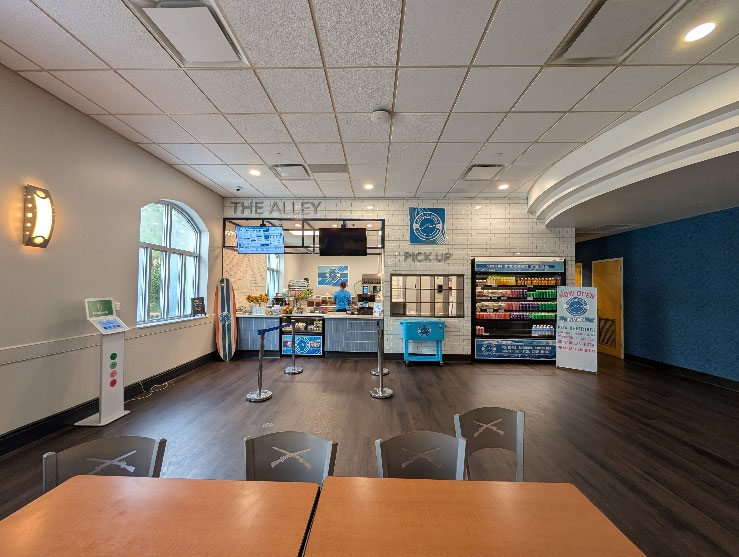
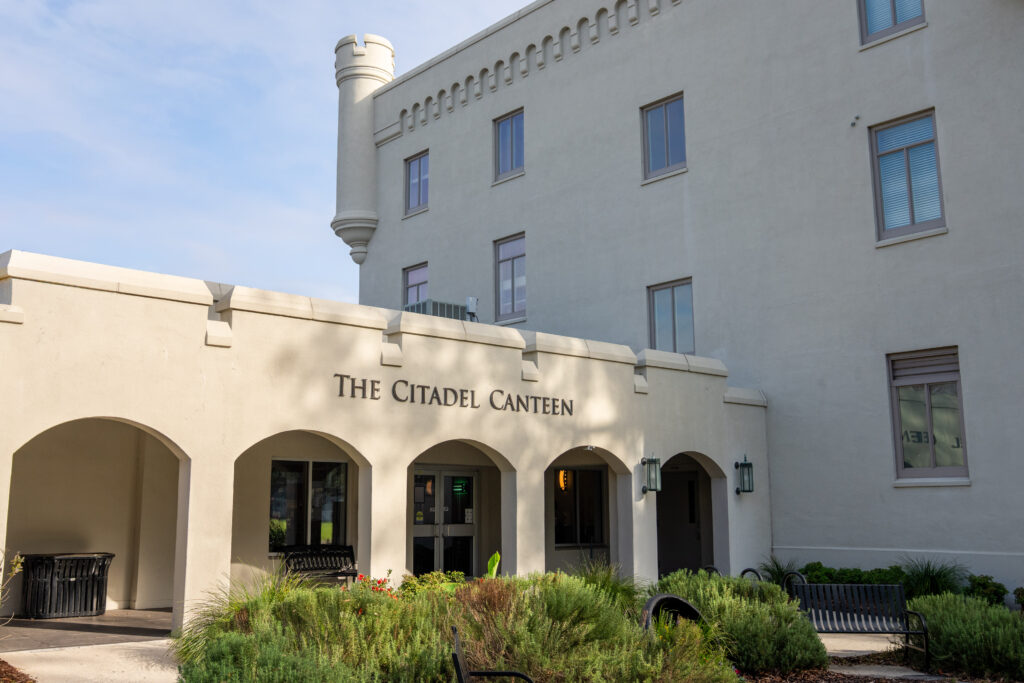
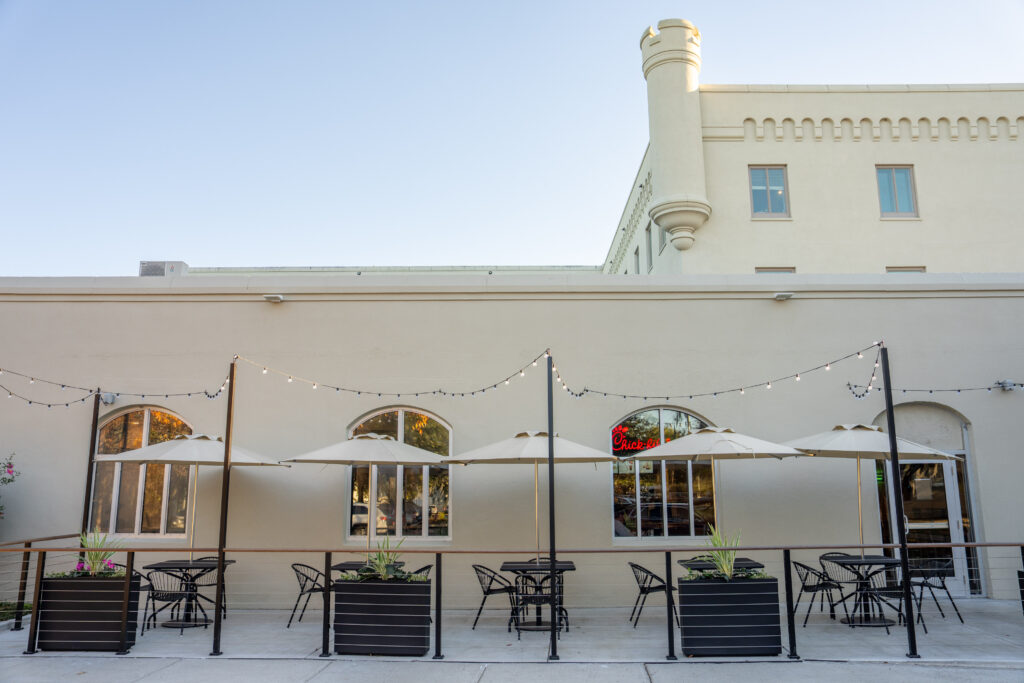
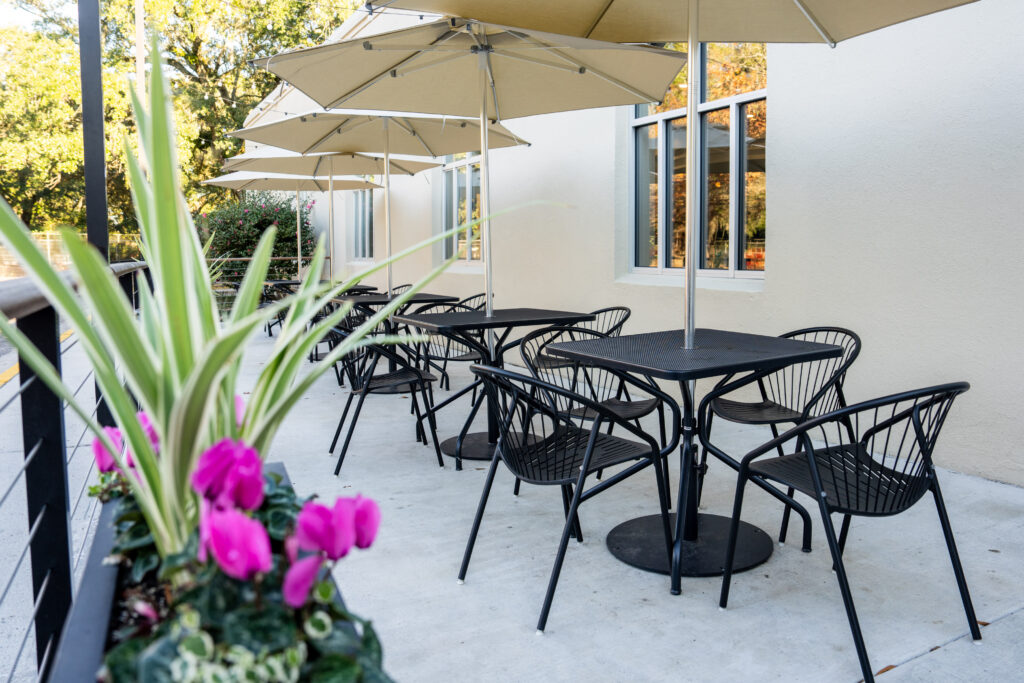
The Canteen area in Mark Clark Hall houses a Chick‐Fil‐A location and another separate vendor location. The second vendor space was renovated in 2025 to update the layout to provide more work area and a more streamlined order experience. The finishes were updated for a fresh look that also aligns with campus standards and compliments the existing Chick‐Fil‐A area. A patio was added on the north side to expand the dining area and offer other seating options.
Details
- Project Number: IH‐679
- Designer of Record: Vision Builders Design
Contract Delivery - Method: Design‐Bid‐Build
- Contractor: American Constructions Services, LLC
- Renovated Area: Approximately 1,200 SF
- Timeline/Schedule: Completed Summer 2025
Water Tower
Timeline
- Completed Summer 2025
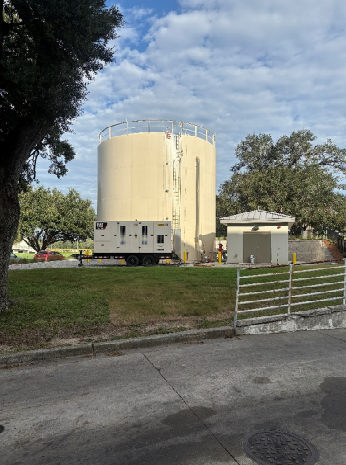
The Citadel utilizes a central fire pump and water storage system to provide fire protection coverage to the buildings on campus. The existing fire water tank and elevated water tower were installed in 1953 and are in poor condition. Based on a tank inspection completed in November 2020, The Citadel initiated a study for an in‐house project to replace the tank. The Study was finalized in February 2022, and indicated a new tank was needed and that the existing fire pump, which was installed in 2001, no longer has capacity to meet current codes for necessary fire water flow for the campus. This project will construct a new 200,000 gallon water storage tank and a new pump house to house a new fire pump that meets the necessary flow criteria. Once complete, the existing water tank, water tower and pump house will be demolished.
The Citadel considered refurbishing the existing tank and replacing the existing pump. This was found to not be feasible due to the poor condition of the tank and the level of repairs required. The tank material is highly corroded inside and out. The tank also has a large amount of silt and sediment in the bottom which has the potential to be sucked into the system in a fire event and could clog sprinkler heads. Additionally, the tank does not meet current OSHA and NFPA safety standards for fire water storage facilities during renovations. The building would be expanded with an addition to the north.
Project Details
- Project Number: H09‐9624‐ML
- Phase II Approved A‐1: $2,550,000
- Designer of Record: DWG/ADC Engineering
- Contract Delivery Method: Design‐Bid‐Build
- Contractor: Bohicket Construction
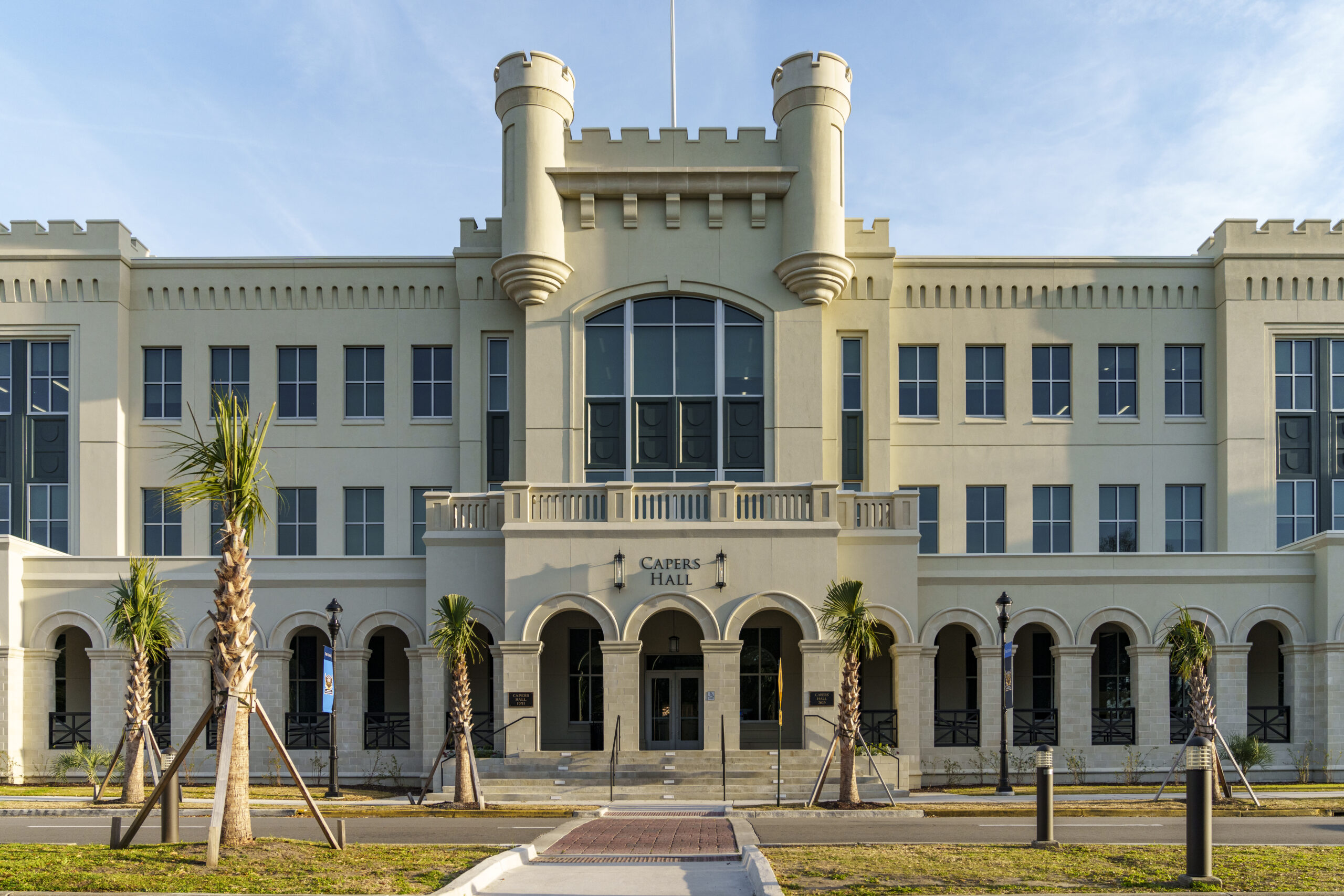
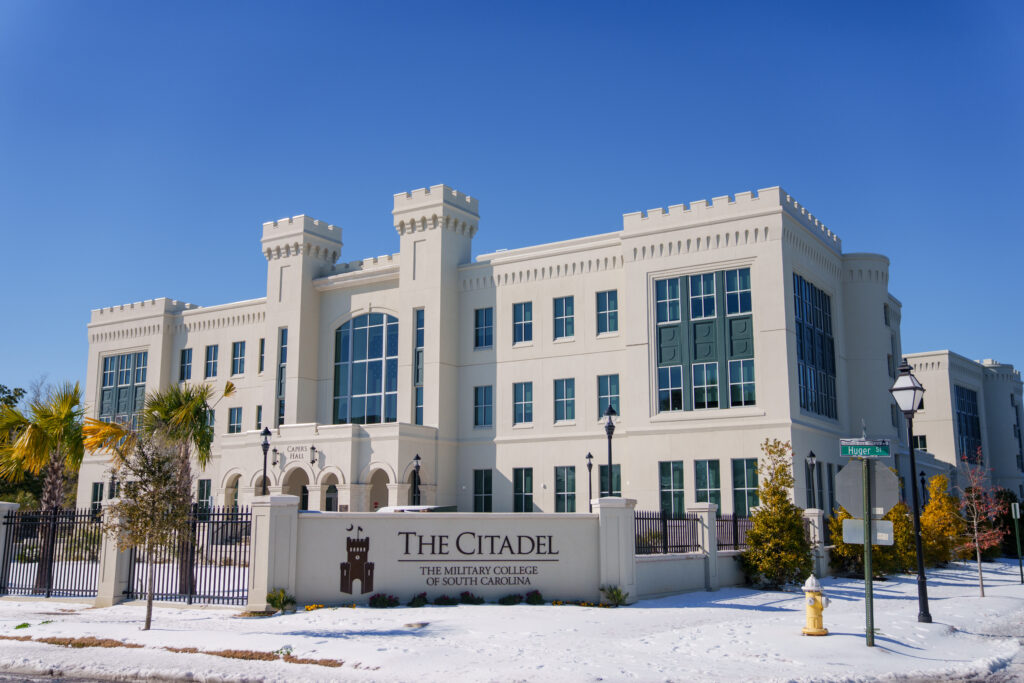
Capers Hall Construction
Timeline
- Completed Summer 2023
Project Details
- Project Number: H09‐9611‐PG
- Contract Type: Construction Manager @ Risk (CM‐R)
- Contractor: Thompson Turner
- Designer of Record: Woolpert, Inc.
- Total Square Footage: 107,700 SF
- Project Budget: $67M
- Project Completion: Summer 2023
Building Spaces & Facilities
- Classrooms & Specialty Learning Spaces:
- Thirty (28) 28‐person
- Two (2) 26 Person Flexible Rooms
- One (1) 28‐person Computer Lab
- Cyber Range & Cyber Lab
- Art Studio
- National Security Classroom
- Center for Inclusive Excellence & Center for International & Special Programs Classroom
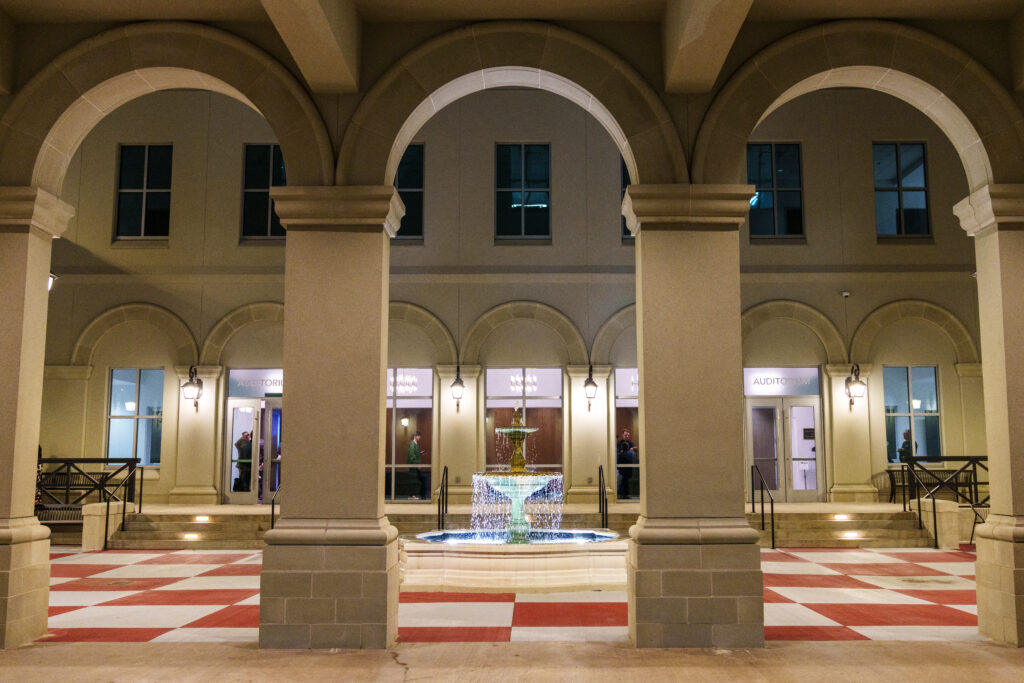
- 250 Seat Performing Arts Auditorium
- Psychology Interview Rooms
- Training Sensitive Compartmented Information Facility
- Legal Studies Classroom
- Digital Media Classroom
- Offices:
- 97+ Offices
- Dean’s Suite
- Department Heads/Directors
- Faculty/Staff Spaces
- 13 Work spaces in multi‐person
offices
- 97+ Offices
- Additional Spaces:
- Three‐Story Flag Atrium
- Student Commons
- Collaborative and Event Areas
- Courtyard
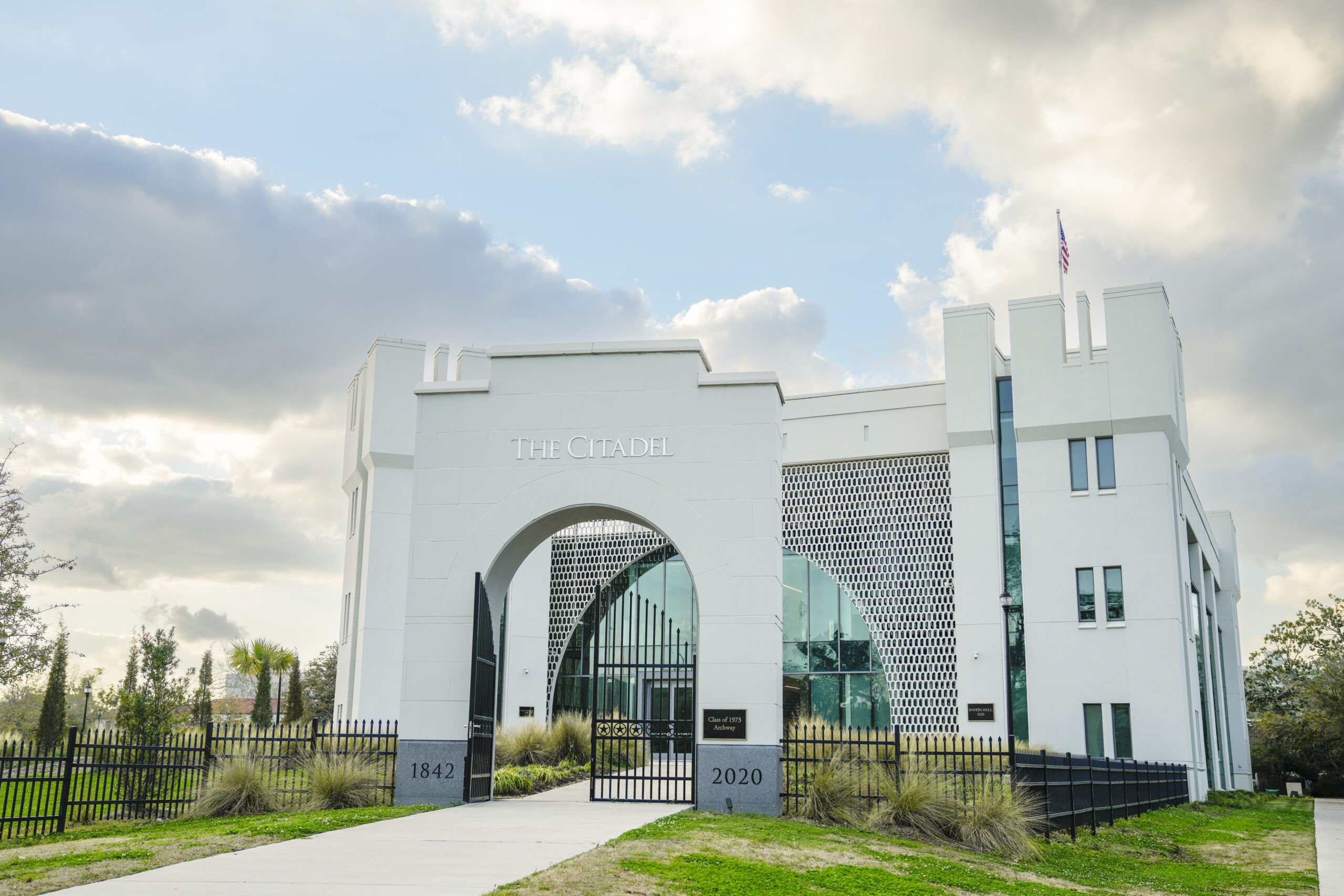
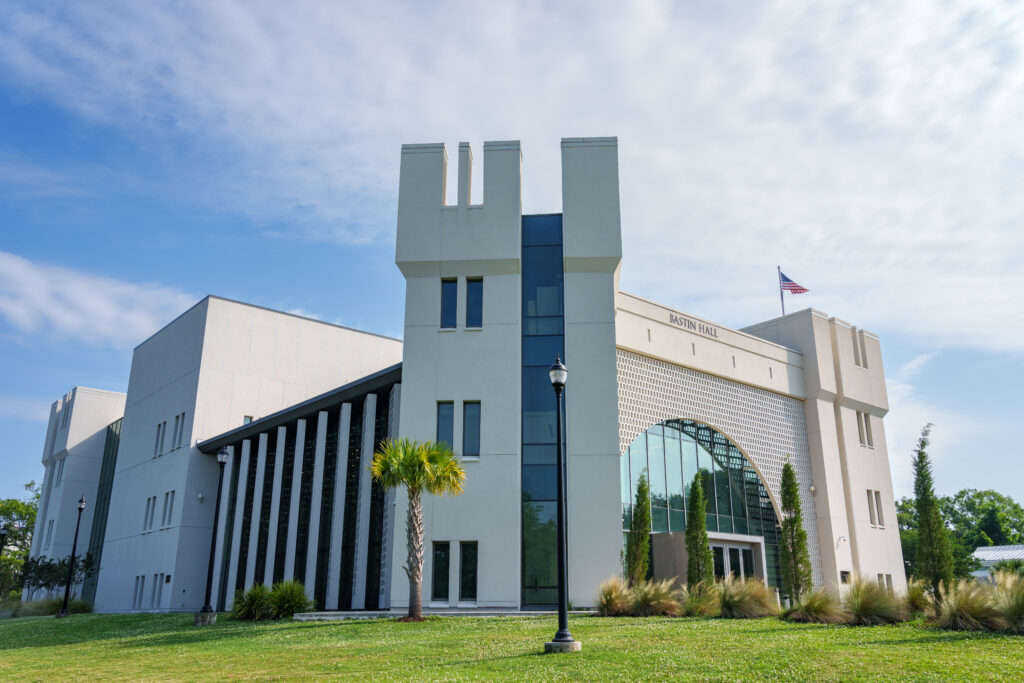
Bastin Hall Construction
Timeline
- Completed Summer 2020